Cracking the Crossword: Unraveling the Seismograph for Earthquake Clues
For avid crossword enthusiasts, the thrill of deciphering a challenging clue is a reward in itself. Among the myriad of words and phrases that populate these linguistic puzzles, scientific terms often pose a unique brain-teaser. One such recurring and popular clue that frequently stumps or delights solvers is the direct query for an
earthquake measuring instrument crossword clue. While seemingly straightforward, the answer holds a world of scientific significance that extends far beyond the grid.
If you've ever wrestled with prompts like "Instrument measuring earthquakes" or "Earthquake measuring device," then you're likely already familiar with its definitive 11-letter solution:
SEISMOGRAPH. This word not only fits perfectly into the confines of a crossword square but also represents a monumental leap in humanity's ability to understand our dynamic planet. This article delves into why the seismograph is such a common and crucial answer, its scientific intricacies, and how this knowledge can help you conquer future puzzles.
Unveiling the "Earthquake Measuring Instrument": The Seismograph Defined
The moment a crossword clue asks for an "
Earthquake measuring instrument," the experienced solver's mind often jumps straight to
SEISMOGRAPH. This particular answer is a perennial favorite in puzzles due to its precise definition, specific letter count (11 letters), and universal recognition within the field of geophysics. For instance, it notably appeared in the Puzzle Page Crossword on June 3, 2023, solidifying its status as a widely recognized and frequently sought-after solution.
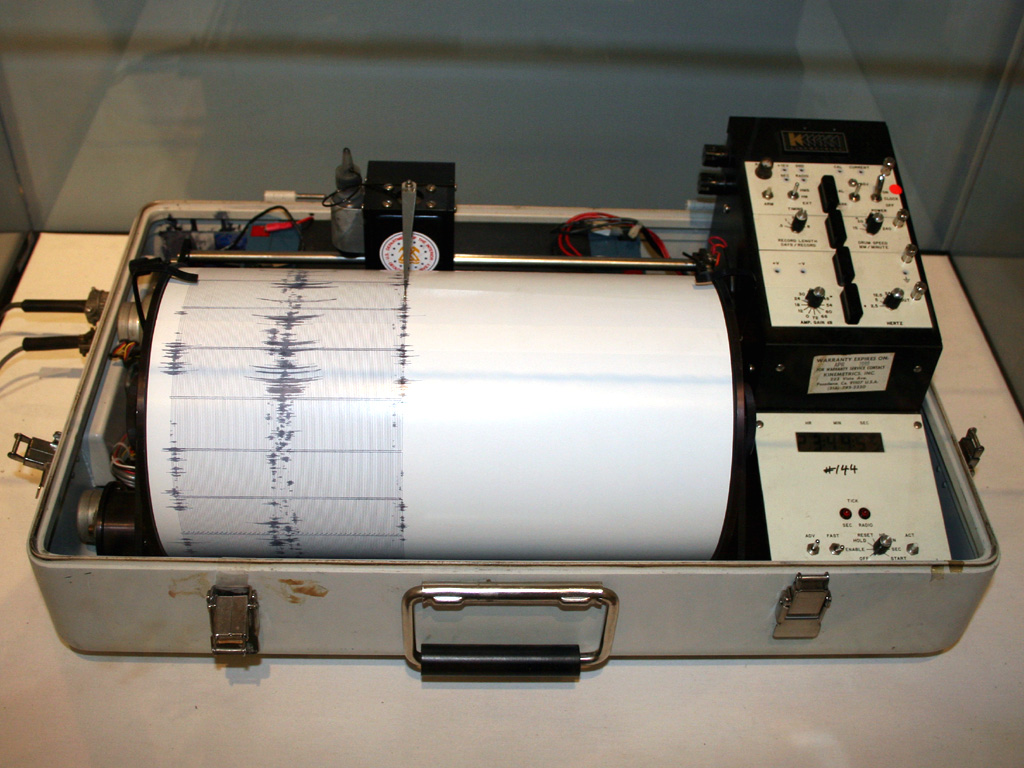
So, what exactly is a seismograph? At its core, a seismograph is a sophisticated scientific instrument designed for the critical task of detecting, measuring, and recording ground movements. This includes not only the powerful tremors of an earthquake but also the more subtle vibrations caused by volcanic activity, explosions, or even distant storms. When it comes to solving an
Instrument Measuring Earthquakes Crossword Clue: Seismograph Explained, understanding its precise function is key.
The term itself offers a clue to its purpose: "seismo" comes from the Greek word "seismos," meaning earthquake, and "graph" from "graphein," meaning to write or record. Thus, a seismograph literally "writes" or "records" earthquakes. It meticulously captures the intensity, direction, and duration of ground motions, providing scientists with invaluable data to analyze seismic events. The popularity of "Seismograph" as an
Seismograph: The Popular 11-Letter Earthquake Measuring Device further underscores its importance in both scientific discourse and recreational wordplay.
A Glimpse into Seismograph Science: How It Works and What It Measures
To truly appreciate the elegance of the
earthquake measuring instrument crossword clue, it's worth exploring the scientific principles behind the seismograph. While often used interchangeably, it's helpful to distinguish between a *seismometer*, which is the actual sensor that detects ground motion, and a *seismograph*, which is the complete instrument that includes the seismometer along with a recording device. Modern seismographs are typically digital, but their fundamental principle harks back to simpler, mechanical designs.
The core concept relies on *inertia*. Imagine a heavy mass suspended by a spring or pendulum. When the ground beneath the instrument moves during an earthquake, the instrument's frame moves with it. However, due to its inertia, the suspended mass tends to remain relatively stationary. The seismograph then records the *relative* motion between the moving frame and the stationary mass.
Historically, early seismographs used a stylus attached to the stationary mass to trace a wavy line on a rotating drum covered with smoked paper or photographic film. These analog recordings, called *seismograms*, provided a visual representation of the earthquake waves. Today, advanced digital seismometers convert ground motion into electrical signals, which are then recorded and processed by computers. These modern devices are incredibly sensitive, capable of detecting ground movements as tiny as a fraction of a nanometer.
Seismographs are designed to detect different types of seismic waves:
- P-waves (Primary waves): These are compressional waves, the fastest seismic waves, and are the first to arrive at a seismograph. They travel through solids and liquids.
- S-waves (Secondary waves): These are shear waves, slower than P-waves, and arrive second. They can only travel through solids.
- Surface waves: These waves travel along the Earth's surface and are typically slower but cause the most damage during an earthquake.
By analyzing the arrival times of P and S waves at multiple seismograph stations, scientists can pinpoint an earthquake's epicenter (the point on the Earth's surface directly above the earthquake's origin) and determine its depth and magnitude. This data is crucial for understanding the dynamics of an earthquake and assessing its potential impact.
Beyond the Clue: The Real-World Impact of Seismographs
While solving the
earthquake measuring instrument crossword clue might seem like a mere intellectual exercise, the instrument it refers to plays a profoundly vital role in our understanding of the planet and our safety. The field of *seismology* — the scientific study of earthquakes and the propagation of elastic waves through the Earth — is entirely dependent on the data collected by seismographs.
Here's how these remarkable devices contribute to our world:
- Earthquake Monitoring and Early Warning: Networks of seismographs constantly monitor seismic activity around the globe. While predicting earthquakes with absolute precision remains a scientific challenge, seismographs are critical for detecting earthquakes as they happen and, in some regions, providing precious seconds to minutes of early warning. Systems like ShakeAlert on the US West Coast leverage seismograph data to rapidly detect significant earthquakes and alert populations before shaking arrives.
- Hazard Assessment and Mitigation: Data from seismographs helps seismologists map active fault lines, understand the frequency and intensity of past earthquakes, and assess seismic risk. This information is invaluable for urban planning, designing earthquake-resistant buildings, and establishing building codes that protect lives and infrastructure.
- Unraveling Earth's Interior: By studying how seismic waves travel through the Earth, reflecting and refracting at different layers, scientists have been able to construct detailed models of our planet's internal structure – from the crust to the core. This deep understanding of Earth's composition and dynamics is fundamental to geology and geophysics.
- Detecting Other Phenomena: Seismographs aren't just for tectonic earthquakes. They are also used to monitor volcanic activity, detect nuclear explosions, track tsunamis, and even study glacier movements and ocean waves. Their versatility makes them indispensable scientific tools.
In essence, the seismograph is our planet's stethoscope, allowing scientists to listen to the Earth's rumblings and interpret its inner workings. This instrument has transformed our ability to live more safely on an active planet.
Mastering Crossword Clues: Strategies for Scientific Terms
Knowing that the answer to an
earthquake measuring instrument crossword clue is "Seismograph" is a great start, but what about other scientific or technical terms that might appear? Here are some strategies to help you crack similar clues:
- Focus on Letter Count: This is paramount for clues like "Earthquake measuring device - 11 letters." If you have a strong candidate word, always double-check its length.
- Break Down the Word: Many scientific terms, like "Seismograph," are derived from Greek or Latin roots. Understanding common prefixes and suffixes can be immensely helpful. "Seismo-" (earthquake) and "-graph" (to write/record) immediately point to its function. Other examples include "hydro-" (water), "thermo-" (heat), "micro-" (small), "-meter" (measure).
- Consider Related Fields: If the clue hints at a specific scientific domain (e.g., geology, biology, astronomy), think about key instruments, processes, or figures associated with that field.
- Look for Contextual Clues: The wording of the clue itself can provide hints. Is it asking for a person, a place, a process, or an instrument? Pay attention to synonyms or descriptive phrases.
- Utilize Intersecting Words: The beauty of crosswords lies in their interconnectedness. If you're stuck on a scientific term, solve some of the intersecting clues first. The letters you fill in can provide crucial insights and narrow down the possibilities.
- General Knowledge and Research: Don't hesitate to use a dictionary, thesaurus, or online search engine if you're truly stumped. Crosswords are a fun way to learn new vocabulary and facts, and sometimes a little research is part of the learning process.
- Practice Makes Perfect: The more crosswords you solve, the more familiar you become with common clues, answers, and the unique patterns that constructors use for scientific terminology.
By employing these strategies, you'll not only solve the puzzle but also expand your general knowledge, making you a more formidable crossword solver.
Conclusion
The journey from a challenging
earthquake measuring instrument crossword clue to the satisfying answer of "SEISMOGRAPH" is a testament to the power of precise language and scientific understanding. This 11-letter marvel is far more than just a word; it represents a cornerstone of modern geophysics, enabling us to listen to our planet's heartbeat, understand its structure, and protect communities from seismic hazards. Whether you're a casual solver or a dedicated puzzler, recognizing the seismograph as the definitive answer not only brings the joy of completion but also connects you to a vital piece of scientific history and ongoing research. So, the next time this clue appears on your grid, you'll not only have the answer ready but also a deeper appreciation for the instrument that helps us crack the code of our dynamic Earth.